Attic Insulation & Blown-In Loose-Fill Services for Airdrie Homes
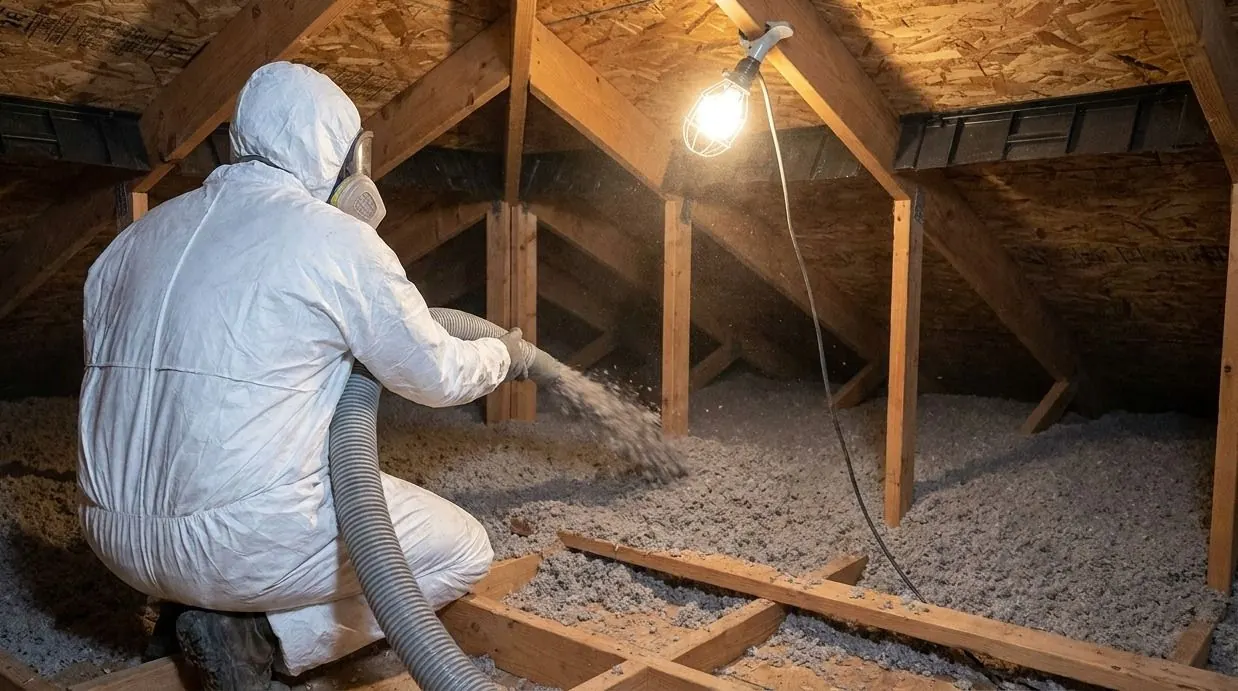
Blown insulation is how most Airdrie homes add R-value without tearing anything apart: cellulose or fibreglass over the ceiling, dense-pack inside closed walls, and the soffit baffles that keep a deep attic ventilated. The right choice depends on your attic’s height, your ceiling, your walls and your exposure to wind, so we start by looking.
How These Systems Differ
Loose-fill insulation is blown from a machine through a hose, so it fills around trusses, wiring and irregular framing in a way that batts cannot. In an attic it builds a continuous blanket over the ceiling, and in most homes it goes over whatever is already there. The benchmark we work toward is the Section 9.36 value in Alberta’s building code for climate zone 7A: RSI 10.43, about R-60, above a ceiling in a house without a heat-recovery ventilator, or about R-49 with one. Those are new-construction targets rather than a retrofit obligation, but they are the right yardstick.
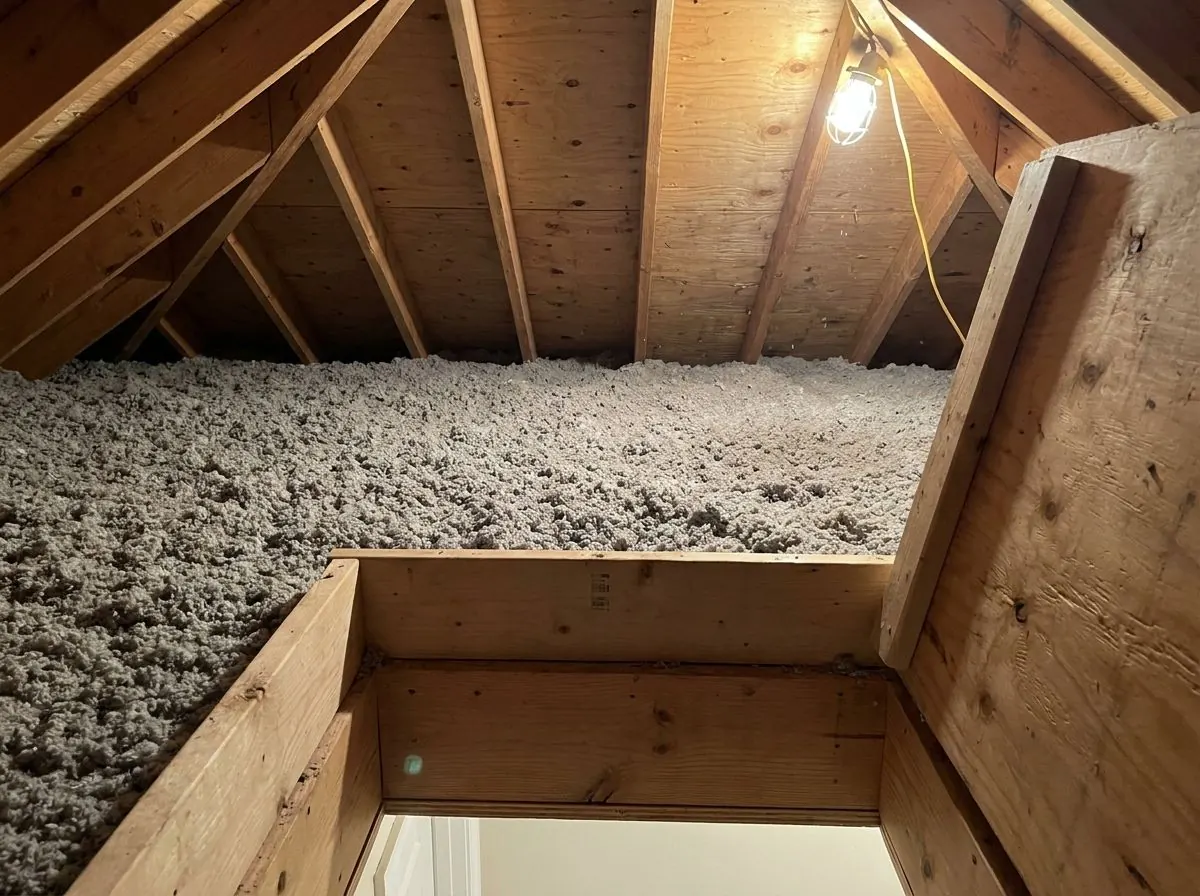
The two attic fills differ in useful ways. Cellulose, borate-treated recycled paper fibre, commonly delivers about R-3.5 to R-3.8 per inch, reaches about R-60 in roughly 16 to 17 settled inches, and resists air washing through it well, but it is heavier and it settles, so it is installed with an allowance. Loose-fill fibreglass commonly delivers about R-2.5 to R-2.9 per inch, so it needs more depth, often around 20 to 24 inches, but it is light, settles minimally and does not absorb water. It relies more heavily on wind dams at the eaves.
Dense-pack and baffles complete the category. Dense-pack uses the same fibre at much higher density, injected into closed wall cavities from outside or inside, for older walls that are empty or half filled. Soffit baffles and wind dams are not insulation at all: they are the prep that keeps a deep attic ventilated from soffit to roof vents and stops wind from scouring the fill back from the outside walls. Most good attic jobs include them.
Attic & Blown-In Services
Blown-In Cellulose Attic Top-Ups
Borate-treated cellulose blown over old attic insulation toward about R-60.
How it works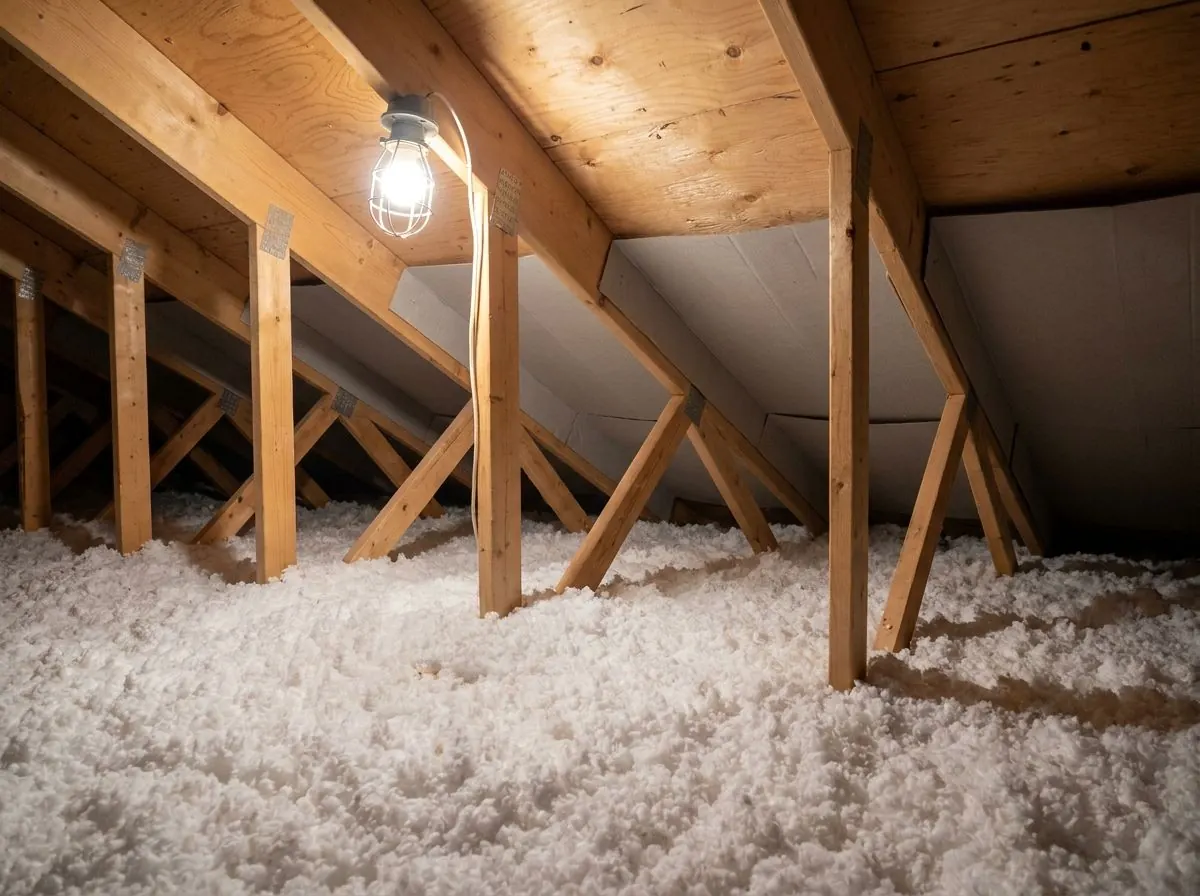
Blown-In Loose-Fill Fibreglass
Light, low-settling fibreglass loose fill for attics, with wind dams at the eaves.
How it works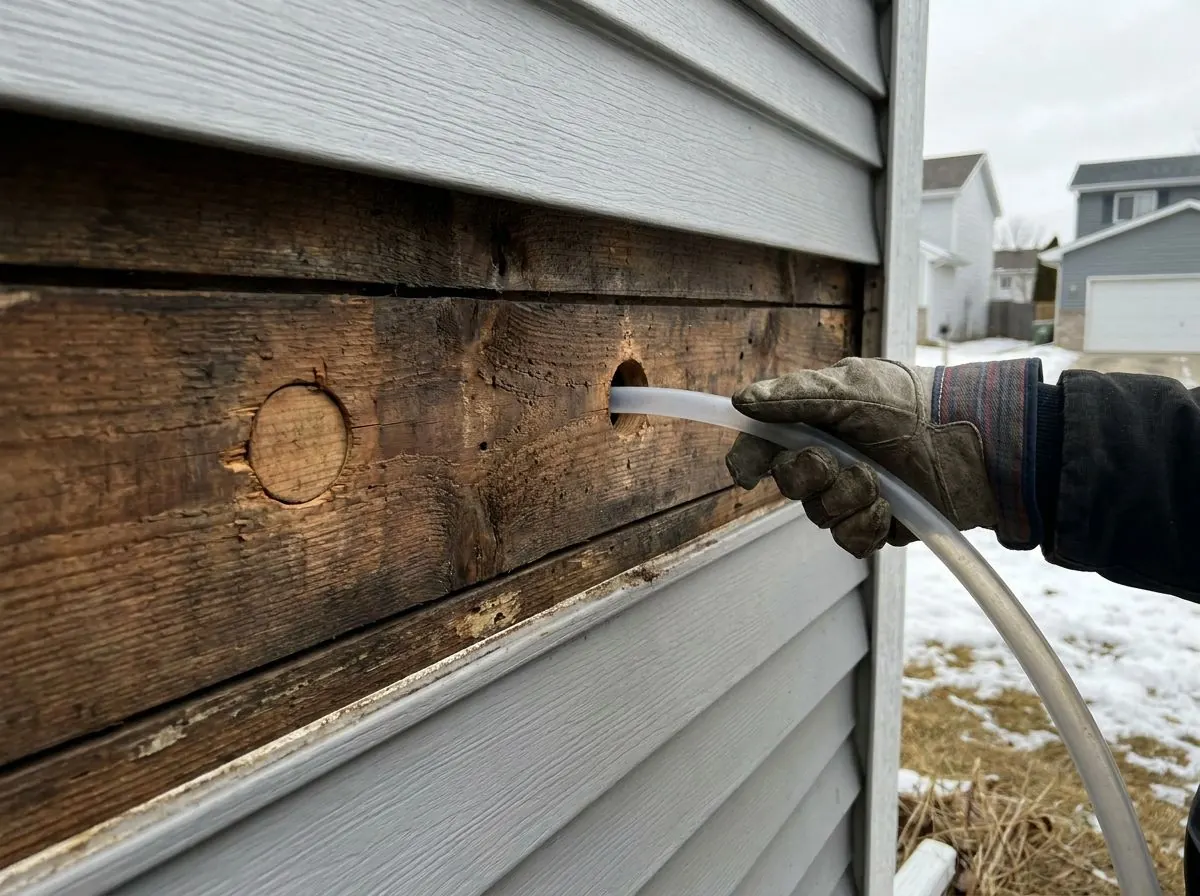
Dense-Pack Cavity Injection
High-density cellulose injected into closed walls from outside or inside.
How it works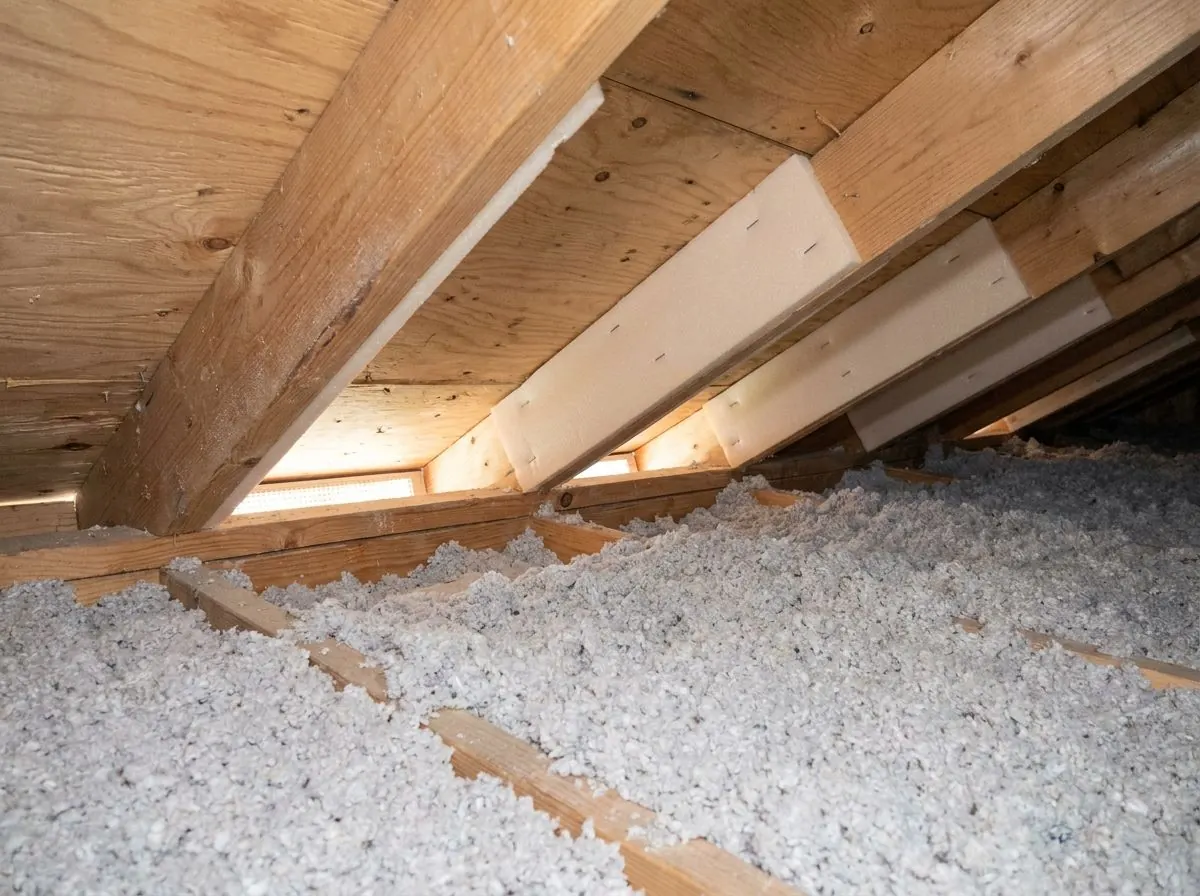
Attic Venting & Baffle Prep
Rafter vents and wind dams that keep soffit-to-ridge airflow open.
How it worksChoosing Between Them
- Plenty of height, sound ceiling
- Cellulose is usually the efficient choice. It reaches the target in fewer inches and a deep layer slows air moving through it, which helps where the attic is draughty at the eaves.
- Ceiling that should stay light
- If the ceiling shows sagging or cracks, or wide framing spacing, lighter fibreglass is safer, provided the attic has room for the extra depth, especially near the eaves.
- Walls are the cold surface
- If the attic is already deep but exterior walls feel cold and scan as empty bays, dense-pack injection addresses the wall directly rather than adding more to the ceiling.
- Frost, staining or buried soffits
- Start with baffles, soffit checks and air sealing. Adding any fill to an attic that already frosts up or has blocked intake vents makes the underlying problem harder to fix.
Attic & Blown-In: Common Questions
Which is better for an Airdrie attic, cellulose or fibreglass loose fill?
How do I know whether my home needs more attic insulation at all?
What should be done in the attic before any new blown insulation goes in?
Other Insulation Services
Talk to Us About Attic & Blown-In
Tell us what the space is and what is going wrong. We will recommend the system that fits, including when a cheaper one will do.