Commercial & Industrial Insulation for Airdrie, Balzac & Rocky View
Commercial, industrial and agricultural buildings fail in different ways from houses: steel decks drip, steel studs bypass the insulation, cold ducts sweat and rated walls get cut open by every trade. We work for owners, property managers and general contractors in Airdrie, Balzac and Rocky View County, installing to the drawings, the listings and the engineer’s specification.
How These Systems Differ
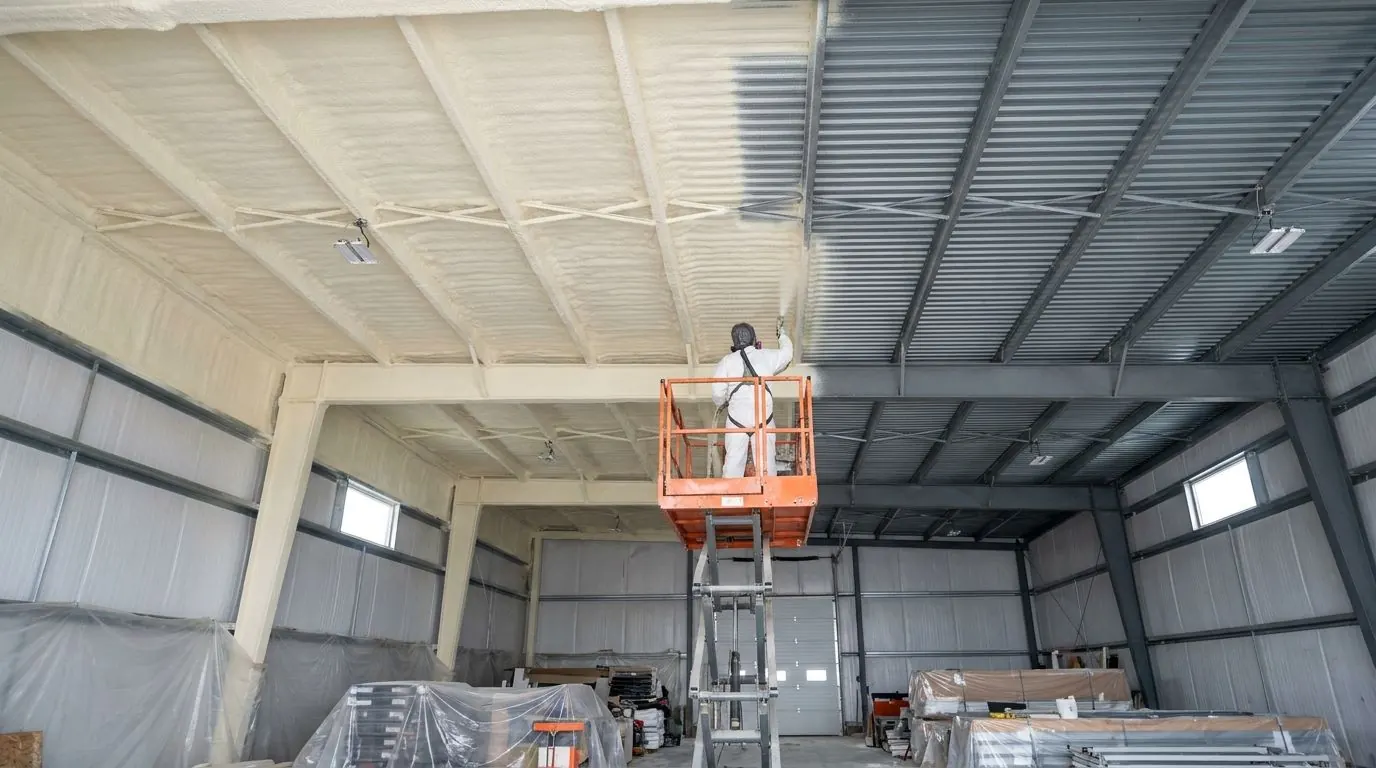
This group of services covers the building envelope and the mechanical and fire-safety details of buildings that are not typical houses. Exterior continuous insulation puts rigid mineral wool or foam board outside the structure, behind rainscreen cladding, so framing and slab edges stop leaking heat. Warehouse and commercial bay spray foam goes directly onto steel roof decks and wall panels, where condensation is the main complaint. Pole barn and ag shop foam applies the same idea to post-frame farm buildings, with ventilation, animals and the county’s view of the building added to the design.
The other two services are about systems inside the building. Duct and HVAC insulation keeps cold ducts and pipes from condensing and warm ducts from losing heat in unheated space, installed to the mechanical engineer’s specification on commercial jobs. Commercial firestopping seals penetrations and joints in fire-rated walls and floors using systems tested to CAN/ULC-S115, matched to each pipe, cable or duct and documented for the inspector. Neither one is optional detailing; both are reviewed on commercial projects.
What these services share is that the installer does not set the rules. Part 3 of the National Building Code – 2020 Alberta Edition, the NECB 2020, product evaluation reports, firestop listings and the project’s own drawings decide what is acceptable, and substitutions go through the designer. Our job is to read those documents properly, install to them exactly, and leave records that an inspector, an insurer or the next owner can rely on.
Commercial & Industrial Services
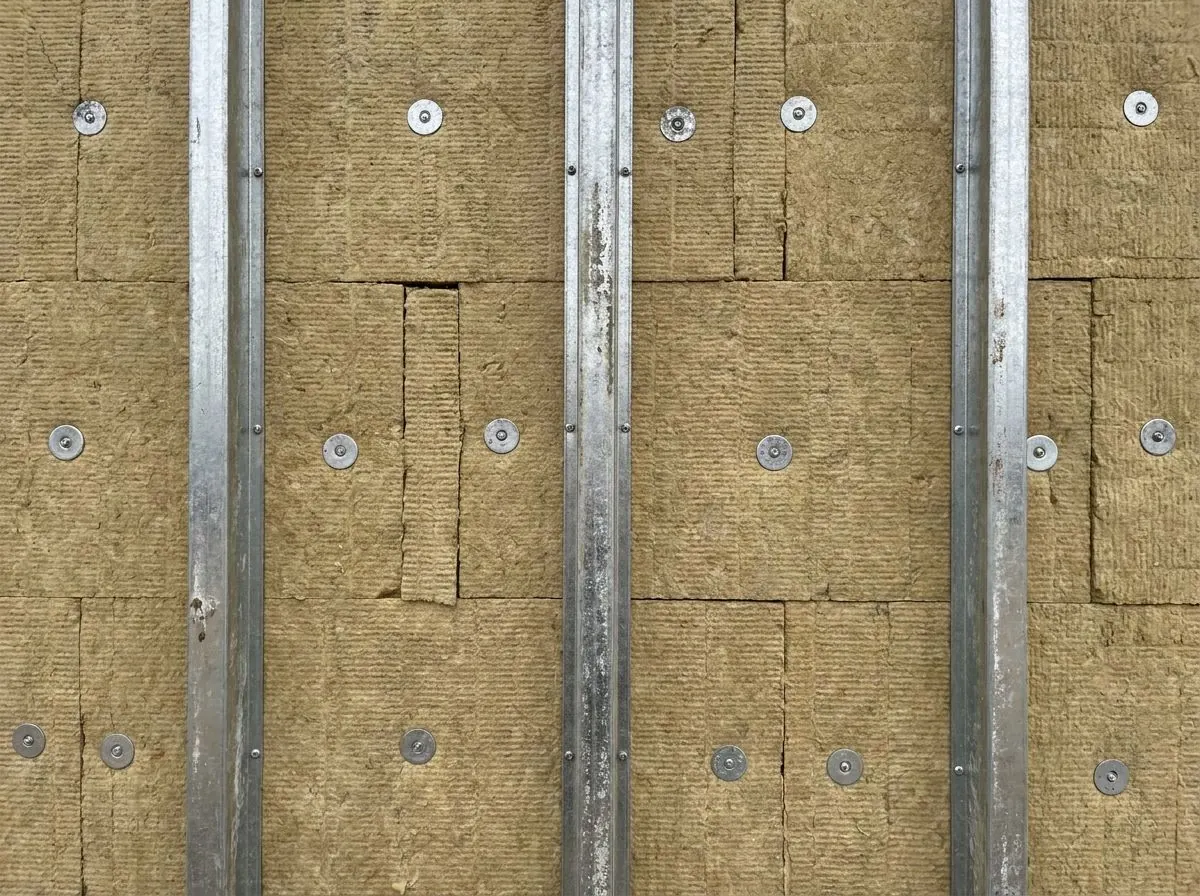
Exterior Continuous Insulation (CI)
Rigid mineral wool and XPS boards outside the framing, behind rainscreen cladding.
How it works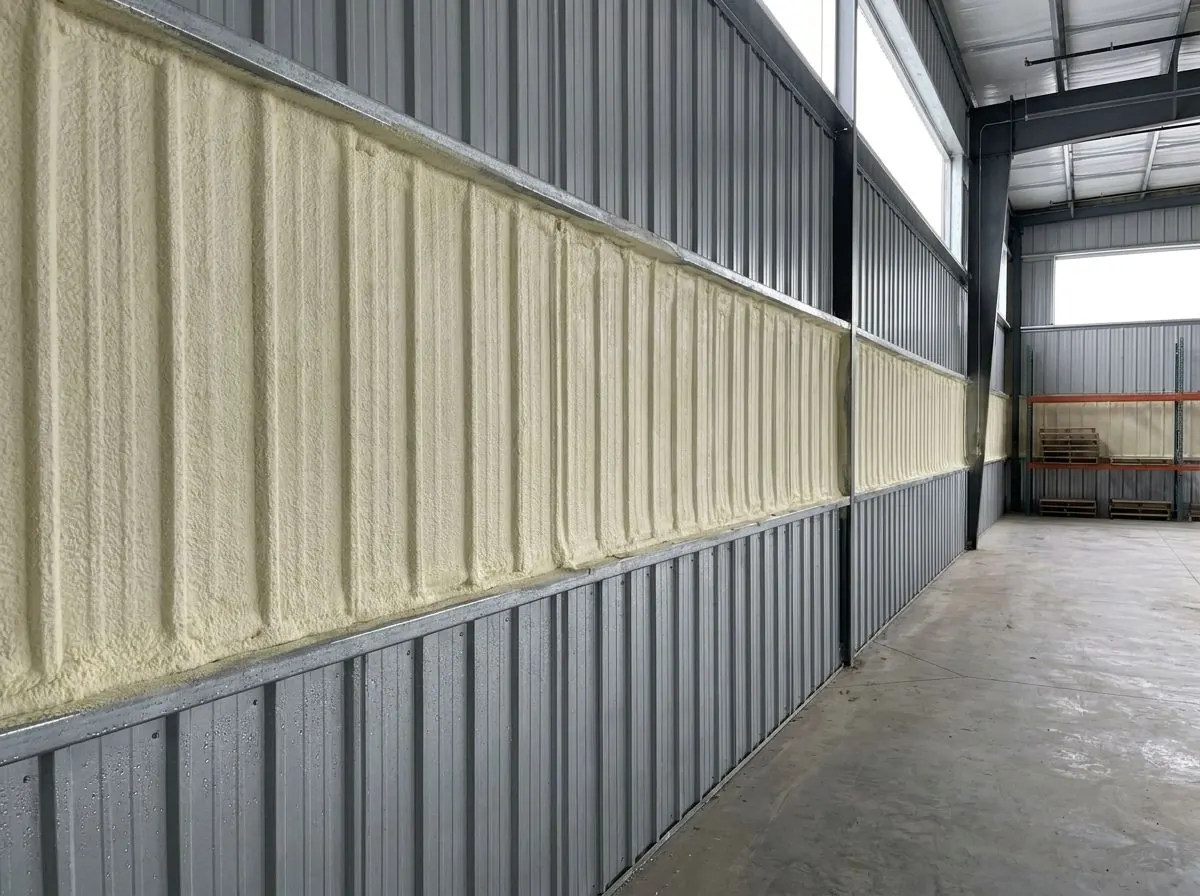
Commercial Bay & Warehouse Spray Foam
Closed-cell foam sprayed direct to steel decks and panels to stop condensation drip.
How it works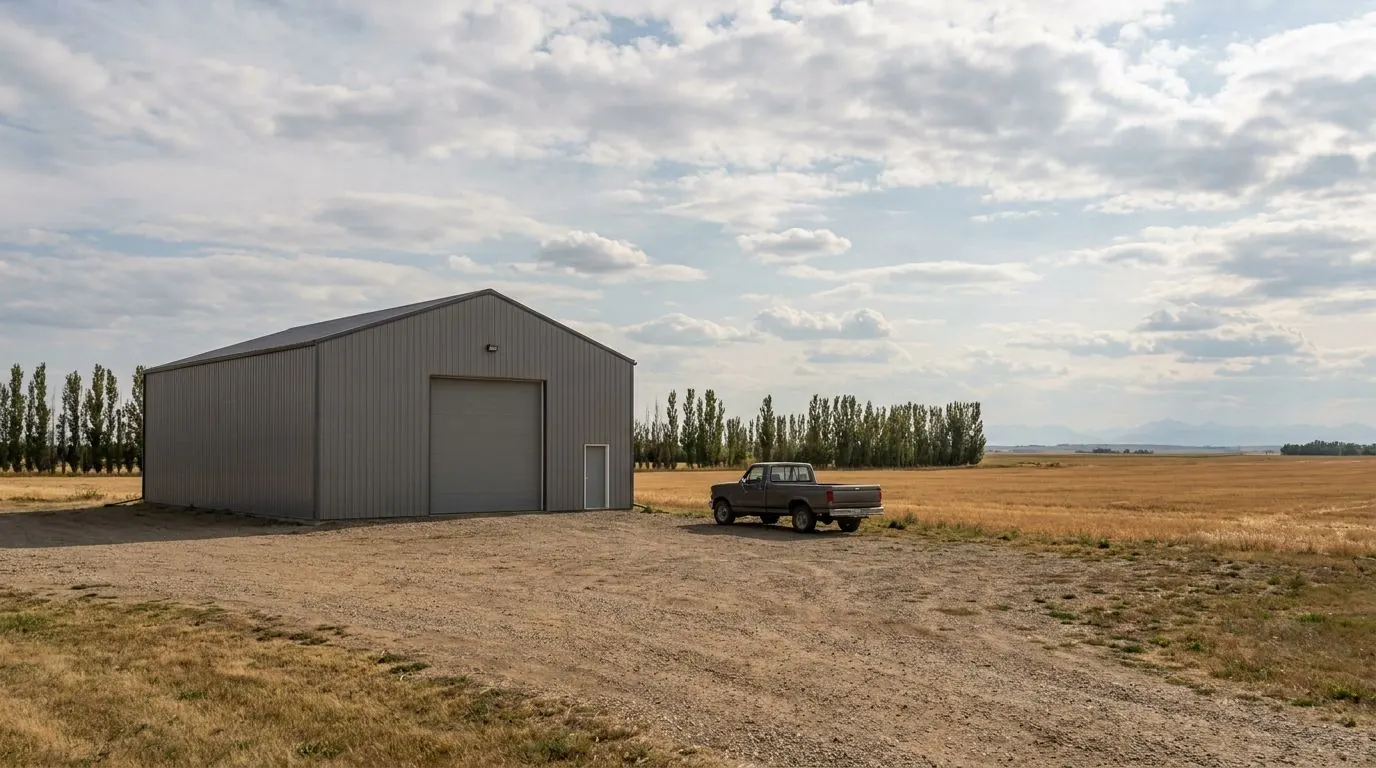
Pole Barns & Agricultural Shops
Closed-cell foam for post-frame barns and ag shops to stop steel sweating and drip.
How it works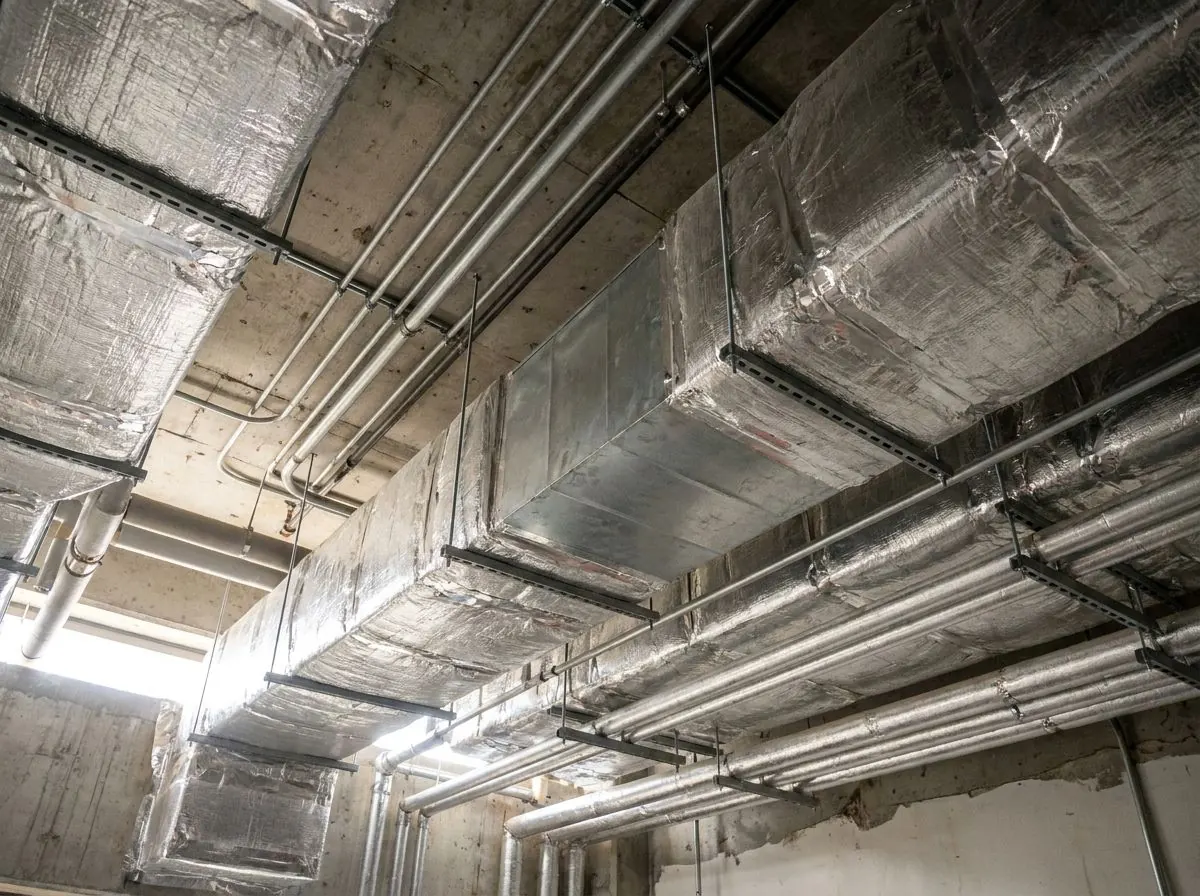
Ductwork & HVAC Thermal Wrap
Duct wrap, liner and pipe insulation for sweating ducts and commercial HVAC.
How it works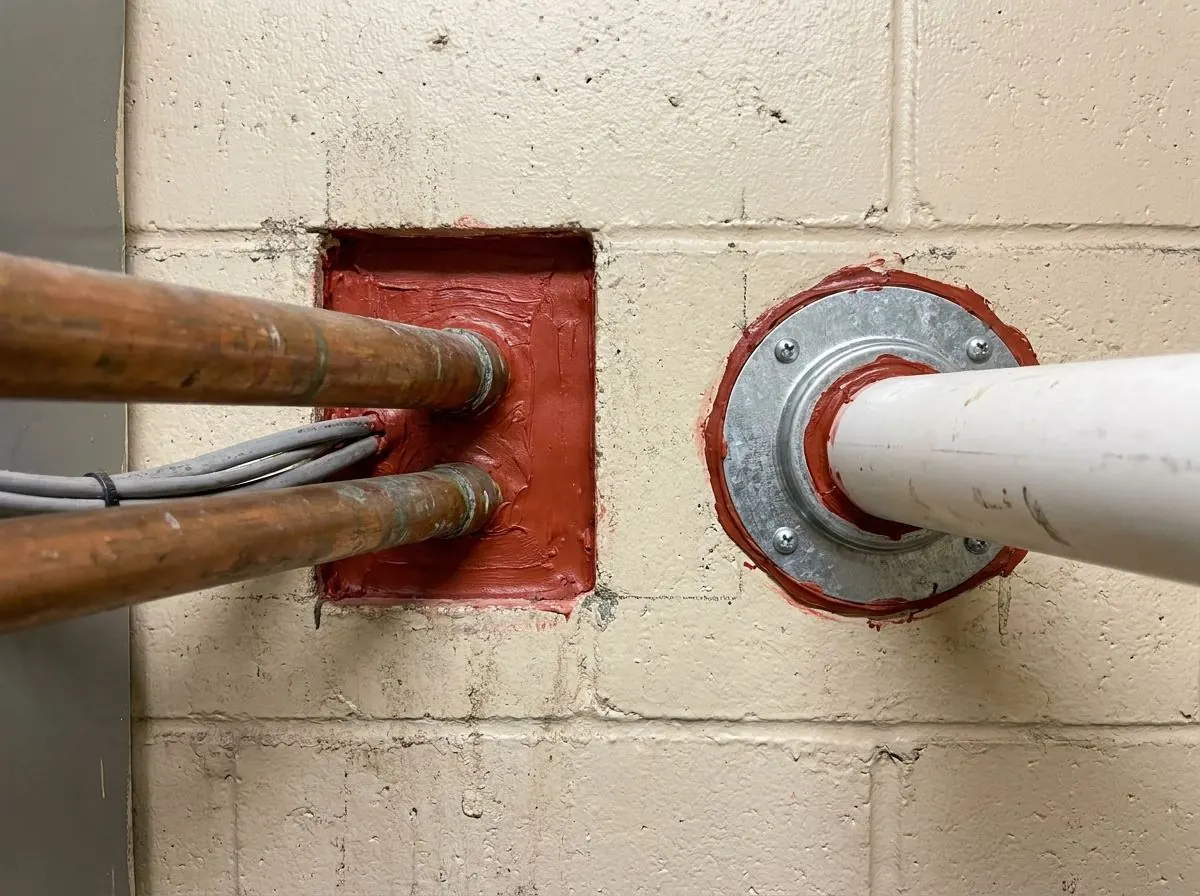
Commercial Firestopping
Listed firestop systems at pipe, cable, duct and joint penetrations in rated assemblies.
How it worksChoosing Between Them
- Wall losing heat through framing
- If a new build or re-clad has steel studs, concrete or thin walls, exterior continuous insulation addresses thermal bridging at the source. It belongs at design stage or during re-cladding, not as a patch on a finished wall.
- Steel dripping inside a building
- For a commercial or industrial steel building, choose warehouse spray foam, with the protection Part 3 and the listing require. For a barn, machine shed or acreage shop, the pole barn service adds ventilation and farm-use questions.
- Ducts sweating or losing heat
- Choose duct and HVAC insulation when water drips from ducts or pipes, or heated air loses temperature through unheated space. Check the equipment is working correctly before assuming insulation is the cause.
- Penetrations through rated walls or floors
- Choose commercial firestopping for new construction, tenant fit-outs or deficiency lists where pipes, cables or ducts pass through fire separations. House fireblocking is a different requirement handled under Part 9.
Commercial & Industrial: Common Questions
Do you work directly for building owners or only through general contractors?
What information helps you quote a commercial insulation job?
Are commercial and farm buildings held to the same insulation rules as houses?
Other Insulation Services
Talk to Us About Commercial & Industrial
Tell us what the space is and what is going wrong. We will recommend the system that fits, including when a cheaper one will do.