Spray Foam Insulation in Airdrie: Closed-Cell, Open-Cell & Hybrid Systems
Spray foam is not one product. Closed-cell and open-cell foams behave very differently in a cold climate, hybrid systems use foam only where it earns its cost, under-slab insulation keeps radiant heat out of the ground, and exposed foam needs a thermal barrier. This is where to sort out which one your project actually needs.
How These Systems Differ
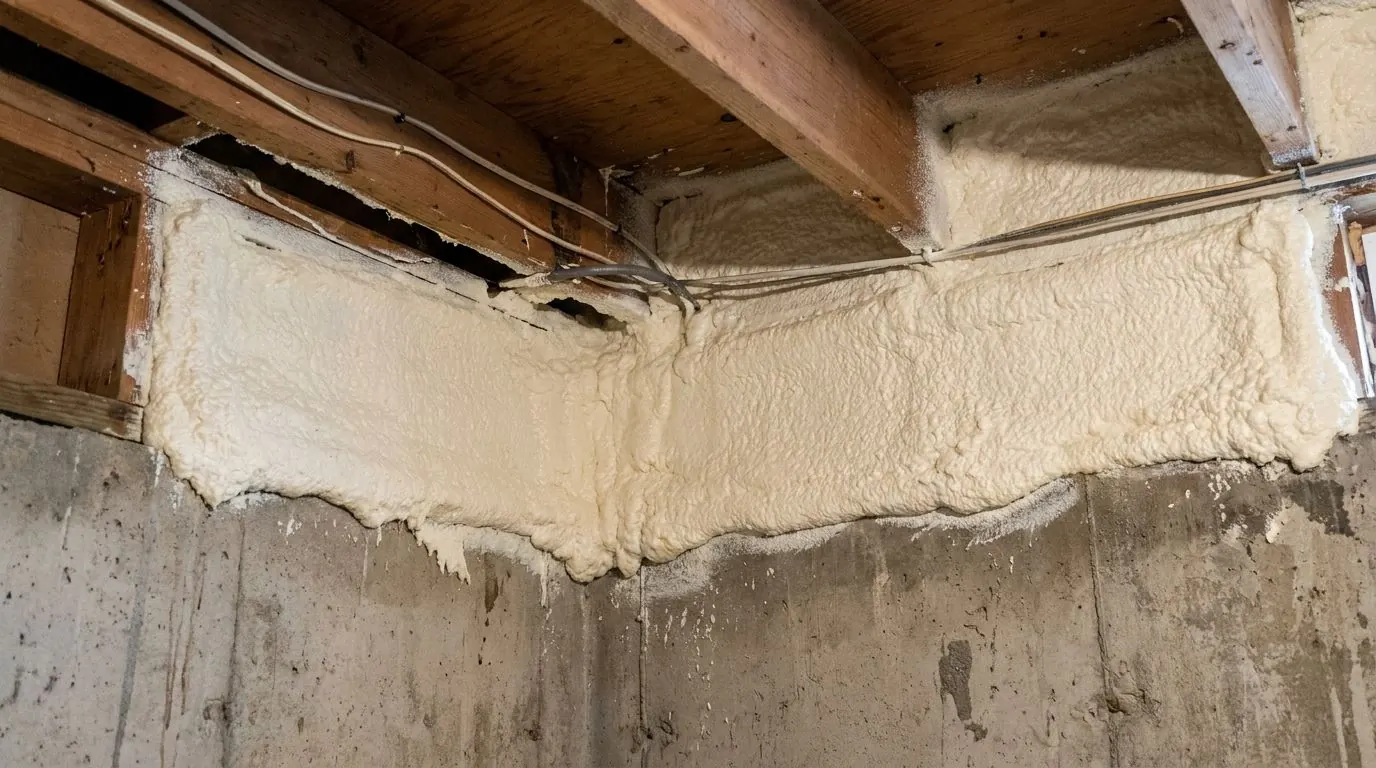
Spray polyurethane foam starts as two liquids mixed at the spray gun and expands into insulation that bonds to whatever it touches. That adhesion is what separates it from batts and loose-fill: it seals the cracks, joints and odd shapes that fibrous insulation leaves open, so it stops air movement as well as slowing heat. In a climate where most moisture damage starts with warm indoor air reaching a cold surface, that matters as much as the R-value. It also means foam is a combustible plastic that has to be covered by a thermal barrier in most places people use.
The two foams differ in almost every practical way. Two-pound closed-cell foam is dense and rigid, commonly about R-6 to R-7 per inch, resists water and at about two inches typically works as a vapour barrier, which is why it belongs on concrete, rim joists, crawl space walls and steel. Half-pound open-cell foam is soft and light, commonly about R-3.5 to R-3.8 per inch, and absorbs airborne sound well, but it lets vapour through and soaks up water, so in this climate it is limited to interior walls and carefully designed assemblies with a separate vapour barrier.
The rest of this family is about using foam intelligently. Flash-and-batt and flash-and-blow systems place a closed-cell layer only where air sealing and condensation control happen, then fill the cavity with less expensive batts or loose-fill. Under-slab insulation, usually rigid board with spray foam around congested plumbing, keeps a heated floor from warming the ground beneath it. Intumescent coatings such as DC315 give exposed foam in shops, barns and crawl spaces an accepted alternative to drywall when they are matched to that foam. Most projects need one or two of these, not all five.
Spray Foam Services
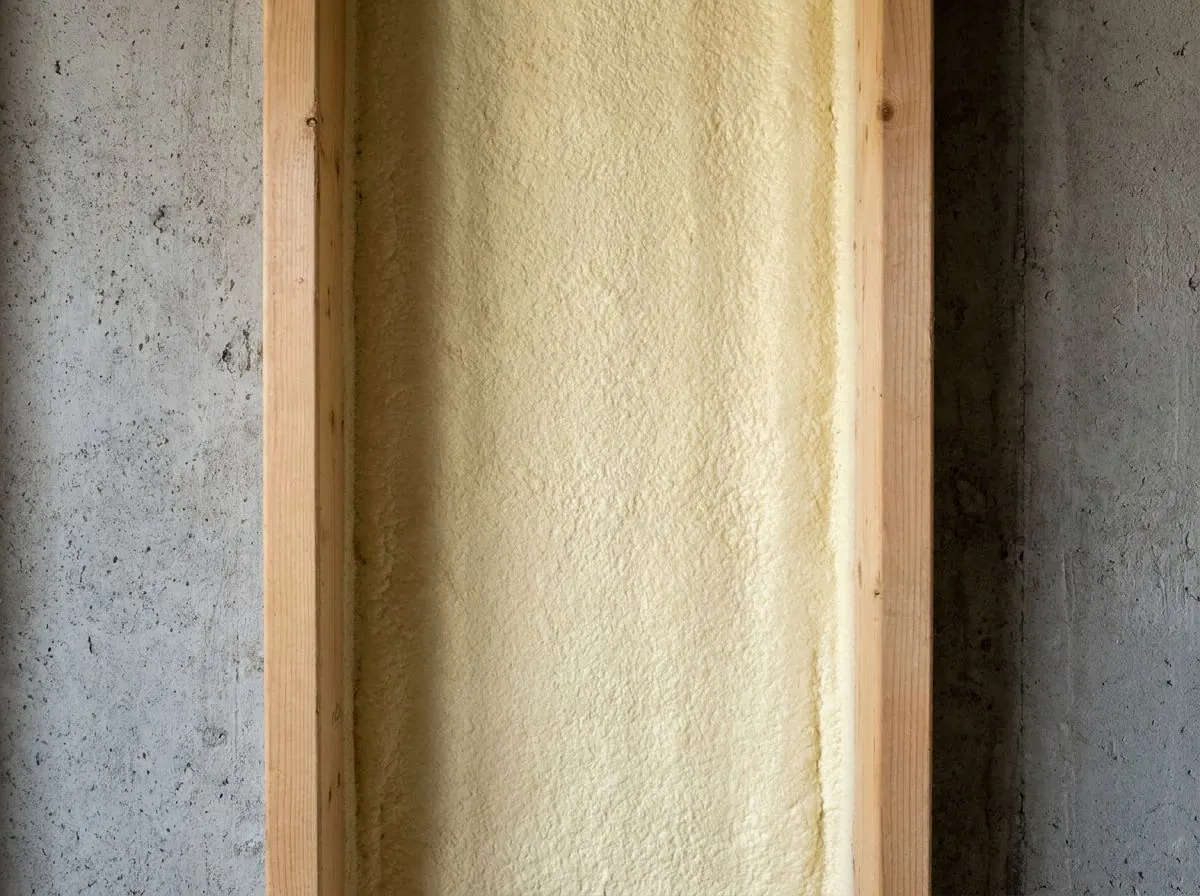
2lb Closed-Cell Spray Foam
2 lb foam: insulation, air barrier and vapour control for concrete and rim joists.
How it works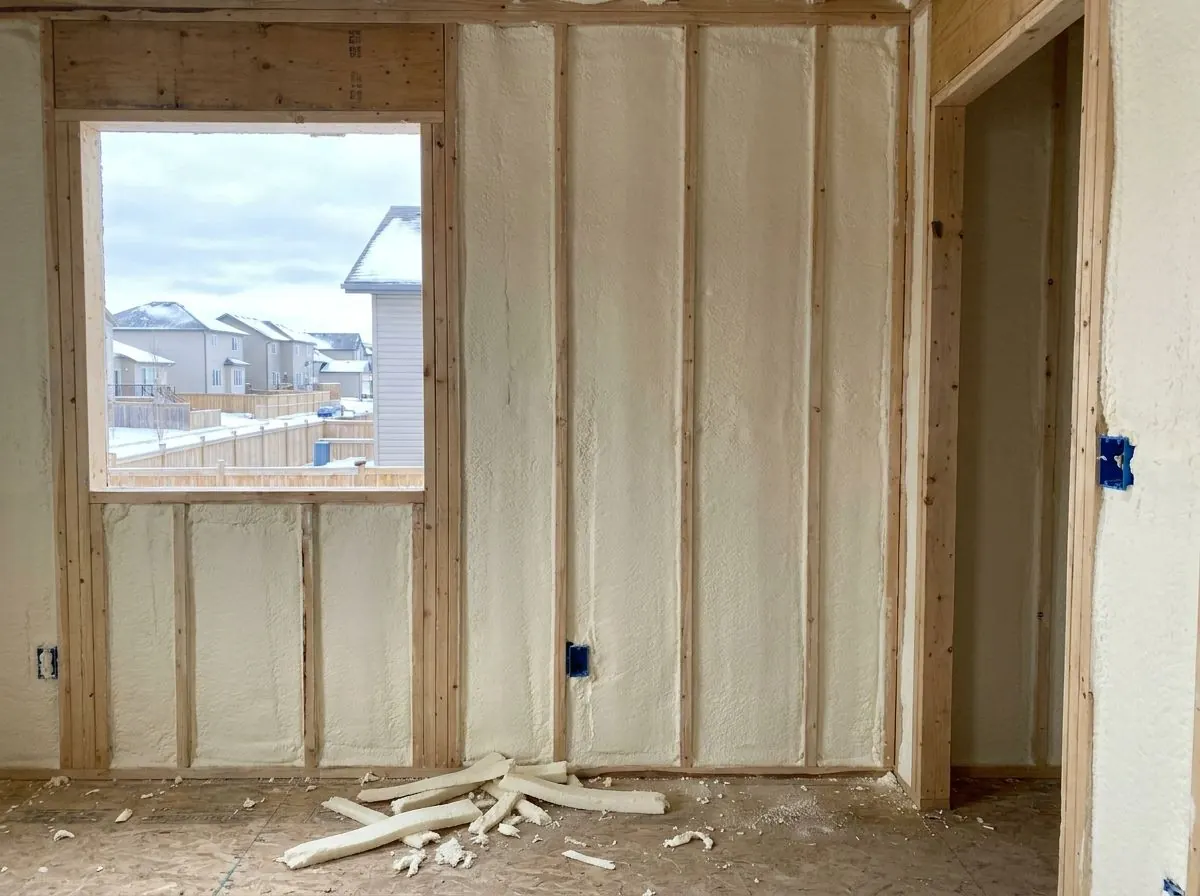
0.5lb Open-Cell Spray Foam
0.5 lb foam for quieter interior walls and ceilings with proper vapour control.
How it works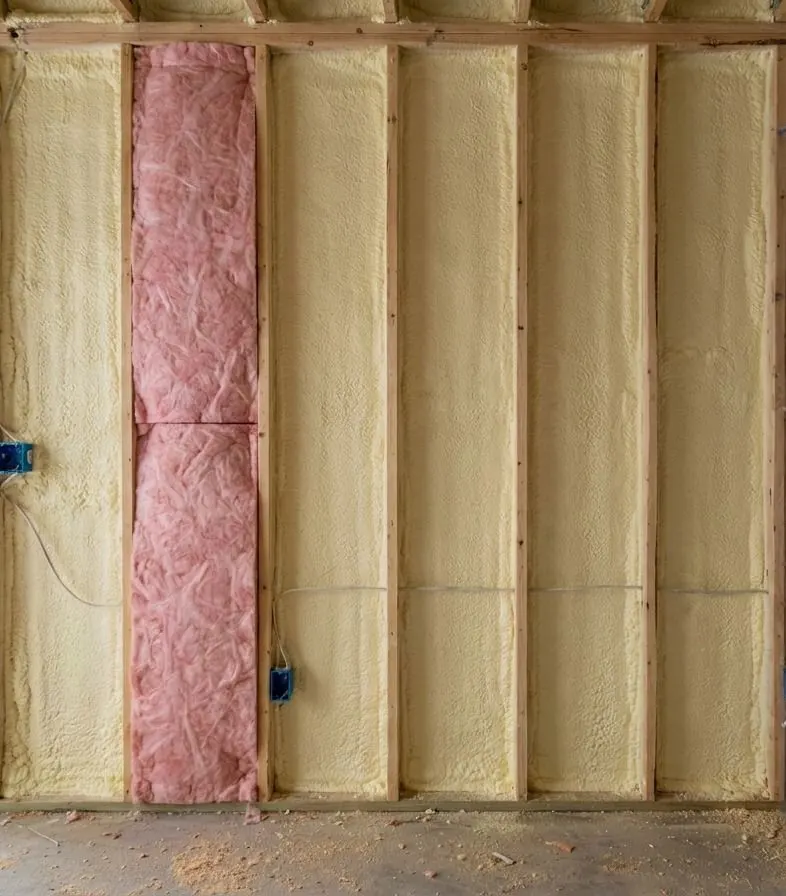
Flash-and-Batt & Flash-and-Blow Systems
Closed-cell foam air seal with batts or blown fill behind it, sized for cold winters.
How it works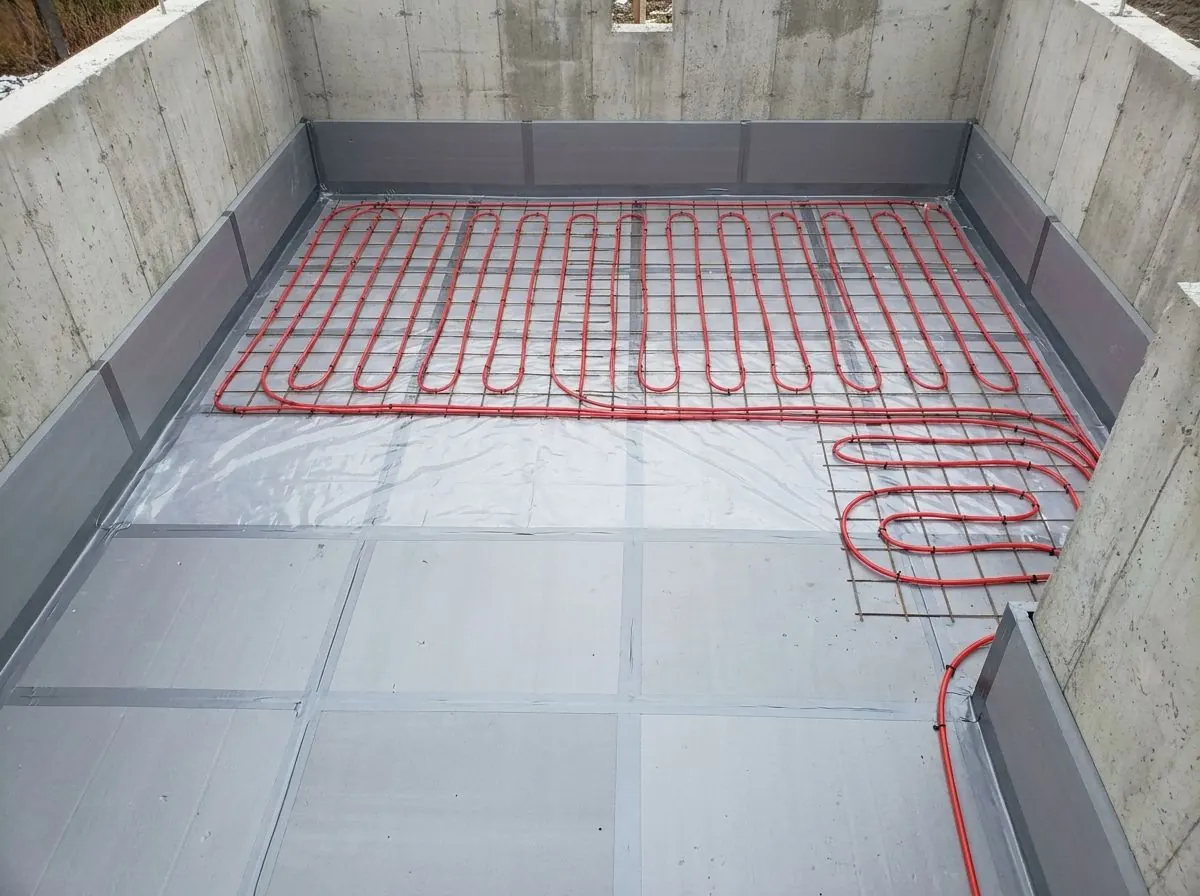
Sub-Slab Rigid & Spray Insulation
Rigid board or high-density foam under radiant slabs, installed before the pour.
How it works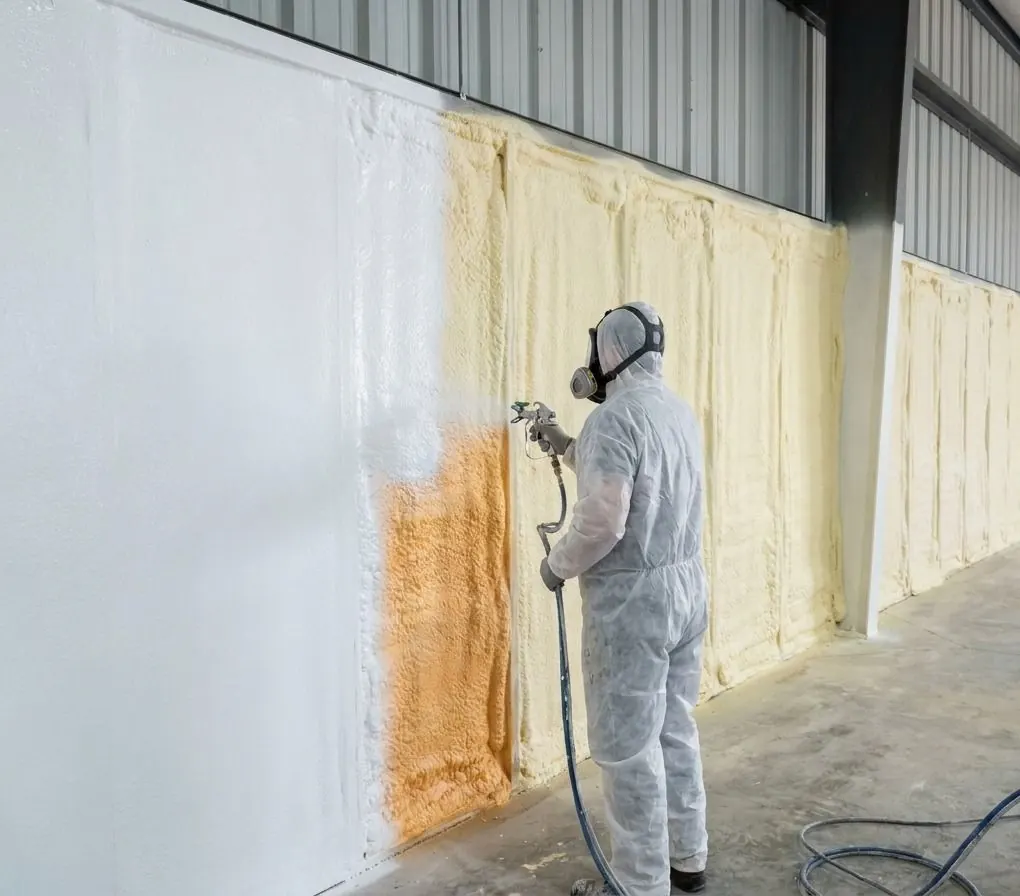
Intumescent Thermal Barrier Coating
Paint-applied intumescent barrier over exposed foam, matched to that foam's listing.
How it worksChoosing Between Them
- Below grade or on concrete
- Closed-cell foam. It bonds to concrete, tolerates moisture and gives air and vapour control in one layer. Open-cell foam is never used below grade.
- Deep cavities on a budget
- Flash-and-batt or flash-and-blow. A closed-cell flash sized for our climate does the sealing, and batts or blown fill supply the remaining depth for less.
- Quieter interior walls
- Open-cell foam fills interior cavities and absorbs airborne noise. For a permitted suite separation, the assembly named on the drawings comes first.
- New heated slab or exposed foam
- Under-slab insulation has to be planned before the pour. Foam left visible in a shop or crawl space needs a coating listed for that foam, or drywall.
Spray Foam: Common Questions
Is spray foam always better than batts?
Who checks that spray foam was installed correctly?
Can spray foam be removed if we renovate later?
Other Insulation Services
Talk to Us About Spray Foam
Tell us what the space is and what is going wrong. We will recommend the system that fits, including when a cheaper one will do.