Insulating Cochrane’s Hillside Homes Against Foothills Wind
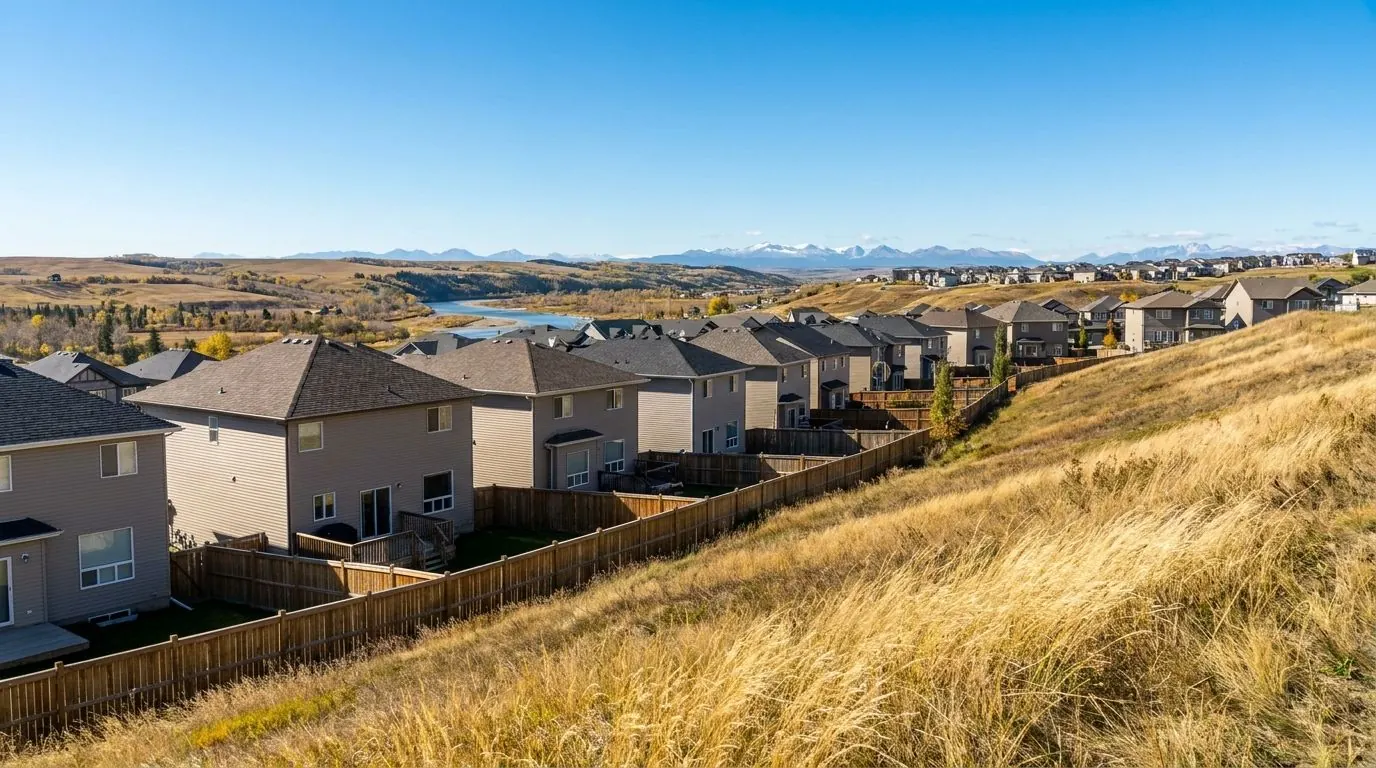
Cochrane sits in the Bow River valley where the prairie meets the foothills, and many of its newer homes are built up the valley slopes with nothing between them and the west wind. That exposure changes what an insulation job needs to focus on. Wind-washed attics, drafty rim joists and ice dams on the high side of town are the problems that exposure tends to cause.
At a Glance
- Permits issued by
- Town of Cochrane
- From our Airdrie office
- About 40 minutes west
- Postal prefixes
- T4C
The Homes and Buildings in Cochrane
The oldest homes are in and around the historic downtown, a mix of older bungalows and small houses that have been renovated in pieces over the decades. Attics in these houses often have thin or mixed insulation layers, unsealed wiring and plumbing holes, and older bath fans that may not vent outside. Some homes of that age can also hide vermiculite in the attic, which gets tested before anyone disturbs it. When the insulation is sound but thin, sealing the ceiling and topping up is usually the right call; when it is contaminated or mixed with debris, removal comes first.
Most of Cochrane’s housing went up during the town’s rapid growth through the 2000s and 2010s, in hillside communities such as Sunset Ridge, Heritage Hills and GlenEagles, and more recently in areas like Fireside and Riversong. These are mostly two-storeys and walkout bungalows with attached garages. Walkout basements are common because of the slopes, and they bring their own detail: the wall changes from concrete to framing partway along, and that transition is where air leaks and cold spots show up once the basement is finished. Bonus rooms over garages and owner-developed basements are the other regular jobs.
Neighbourhood Notes
Historic downtown and older streets
The oldest housing in town, often renovated in stages with attics that show every era of electrical work. We check for vermiculite and old wiring first, then look at air sealing and whether a top-up or full removal makes more sense.
Sunset Ridge
A hillside community on the higher ground above town, built in phases over roughly the last two decades. Wind exposure is the main issue: wind-washed insulation at the eaves and drafts at the rim joists of homes facing west.
Heritage Hills
Sloped streets, often with walkout basements, built in phases from the mid-2000s onward. As owners finish those walkouts, the concrete-to-framing transition and the rim above it need proper air sealing and a continuous vapour barrier.
GlenEagles
Homes around the golf course, largely built from the late 1990s onward. Where a house has a complex roof line or vaulted sections, the attic has hard-to-reach corners where insulation is often thin and ice dams tend to form.
Fireside and Riversong
Newer communities built largely from the 2010s onward. Attics are generally to more recent standards, so the work is usually bonus rooms over garages, basement developments and sound control for suites.
Acreages around town
Rural homes, detached shops and garages on larger lots outside town limits, often more exposed than anything in town. Shops and outbuildings here are commonly insulated with closed-cell spray foam, protected by drywall or an accepted coating.
Permits in Cochrane
Authority having jurisdiction: Town of Cochrane
Properties inside town limits fall under the Town of Cochrane, which is the authority for building permits there. Basement developments and secondary suites need a permit, and the insulation and vapour barrier in that work are part of what gets inspected, so they need to be installed and left visible in line with the Town’s process. For other insulation work, the Town decides whether a permit applies. Acreages and rural properties outside town limits with a Cochrane address are generally under Rocky View County instead, so check which municipality your property is actually in before you apply.
What Cochrane Homes and Buildings Need Most
Attic Air Sealing & Penetration Proofing
Hand-sealing stacks, wiring holes, top plates, fixtures and flue chases.
Attic Venting & Baffle Prep
Rafter vents and wind dams that keep soffit-to-ridge airflow open.
Ice Dam & Attic Frost Mitigation
Air sealing, soffit prep and an R-60 top-up to stop ice dams and attic frost.
Cold Basement Walls & Rim Joists
Closed-cell foam on rim joists and foundation walls for warm, dry basements.
Thermal Imaging & Draft Audits
Infrared scans to find leaks and gaps, with before-and-after images.
Detached & Heated Garages
Full thermal envelopes for detached and heated garages running gas unit heaters.
Insulation in Cochrane: Questions
Is Cochrane too far for you to come out?
My upstairs rooms on a west-facing hillside lot are cold along the outside walls. What causes that?
Who issues the permit for my Cochrane basement development?
Insulation Work in Cochrane?
Call or send the details. Airdrie Insulation works from Airdrie, and we will tell you what the job needs before we price it.